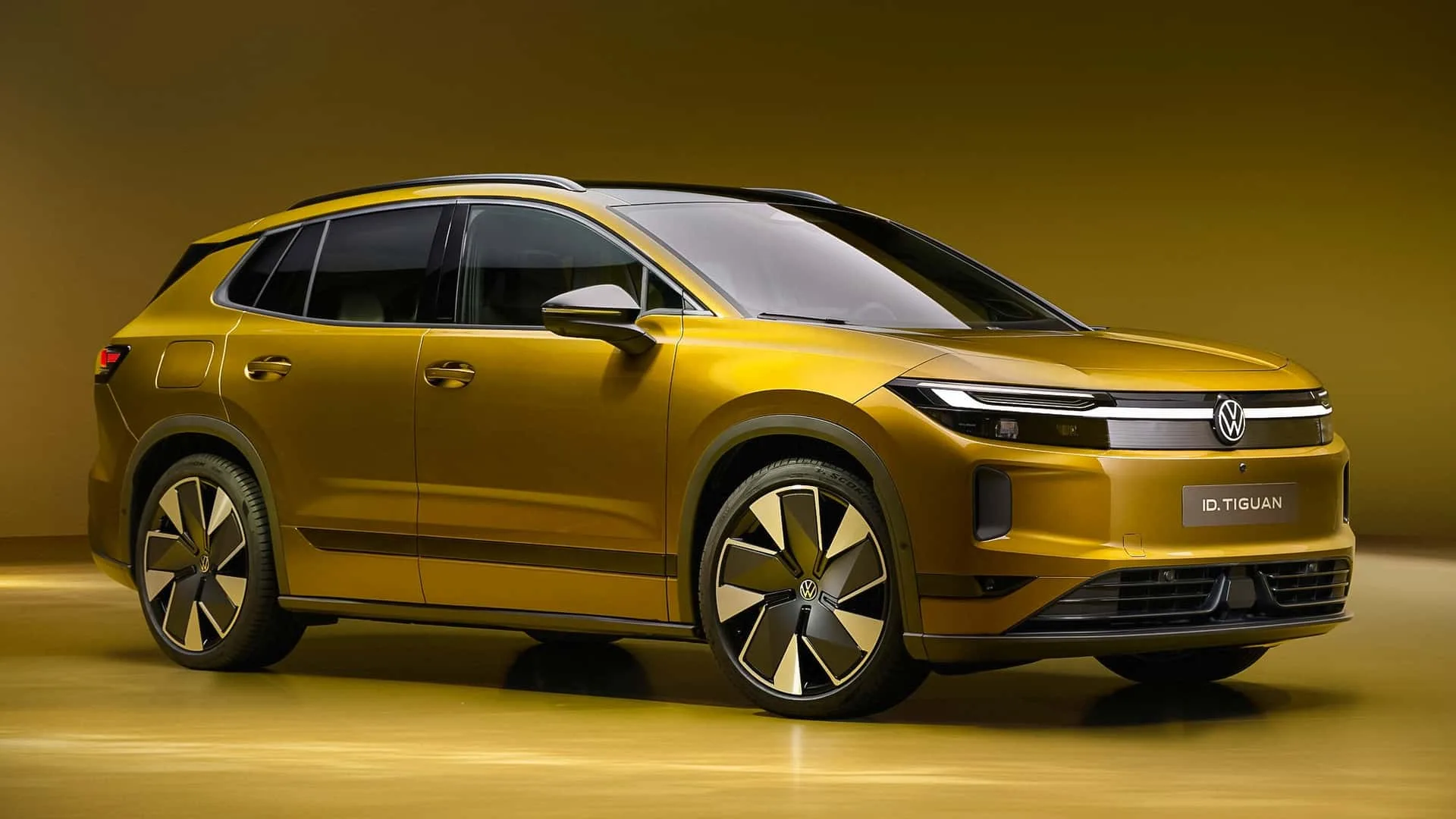
Volkswagen unveiled its ID. Tiguan electric SUV at a world premiere on Friday, October 9, 2026, confirming that the successor to the ID.4 and ID.5 will restore physical buttons and offer retro digital dials modelled on the blue-and-red instruments of the fourth-generation Golf.
The mid-size model, which goes on sale in Europe in early 2027, merges the brand's best-selling nameplate with its mass-market electric line. More than 950,000 examples of the outgoing ID.4 and ID.5 have been built, and the new SUV will be produced in Emden alongside the petrol, diesel and hybrid Tiguan built in Wolfsburg, Volkswagen said.
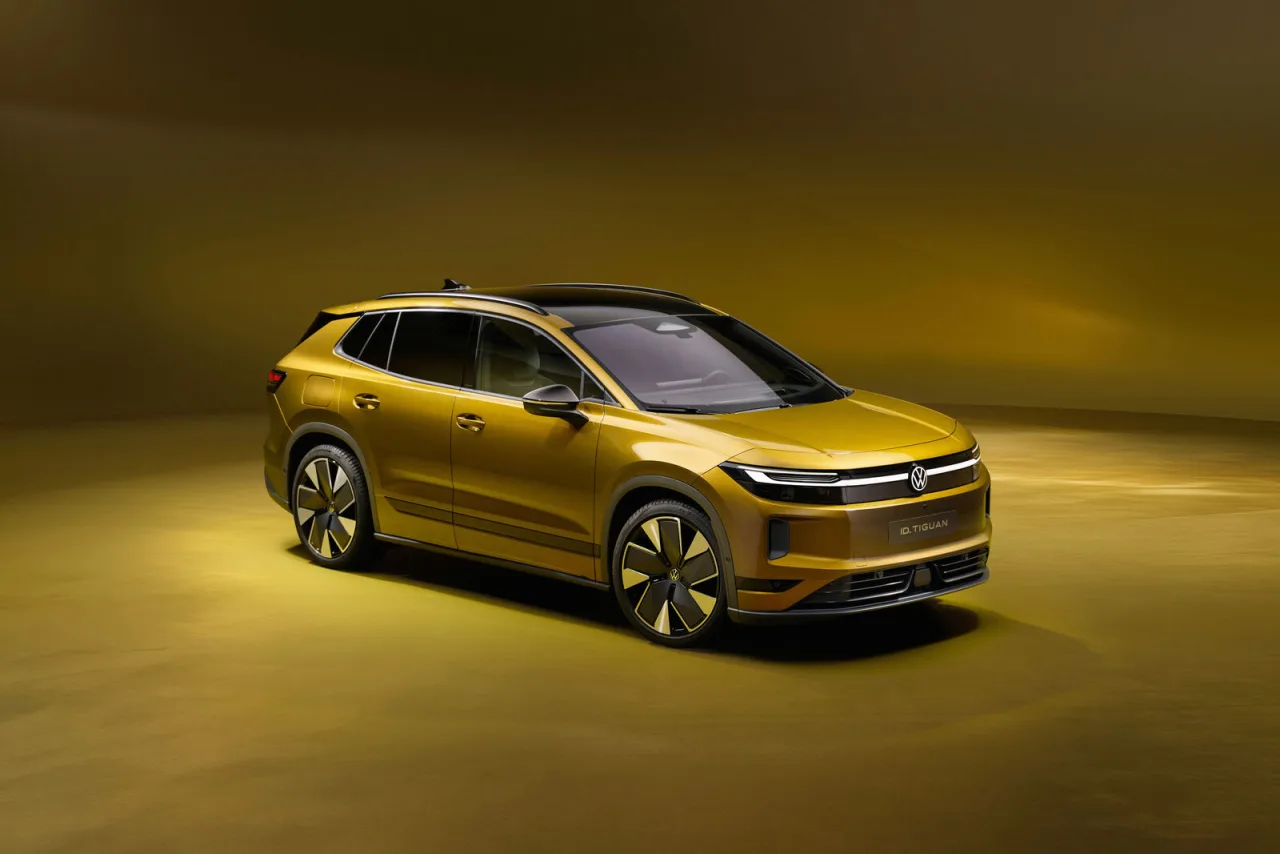
"The Tiguan is our best-selling model worldwide, and the ID.4 and ID.5 are among our most successful electric cars. The ID. Tiguan brings these two success stories together," Thomas Schäfer, chief executive of the Volkswagen brand, said in the announcement. Schäfer described the car, built on the upgraded MEB+ platform with a range of up to 600 kilometres, as "a new benchmark for our electric SUVs made in Germany".
Pre-sales open in Germany and many other European countries on Monday, October 13, 2026, at prices starting from 42,695 euros (about $47,800), with first deliveries to follow the early-2027 market launch. Buyers can choose from four trims, Trend, Life, Style and R-Line, and three powertrains: a rear-wheel-drive version with 140 kW (190 PS) and a 58 kWh battery, a rear-wheel-drive version with 210 kW (286 PS) and a 77 kWh battery, and a 220 kW (299 PS) 4MOTION all-wheel-drive variant with the larger pack.
A course correction on controls
The most striking change is what Volkswagen has taken away: years of touch-sensitive surfaces. Climate basics move to a physical button bar in the centre console, the steering wheel swaps capacitive pads for real switches, volume and track changes use a rotary controller, and the ID.4's two-switch window arrangement is replaced by conventional controls for all four windows. Classic pull-style door handles return in place of the flush units.
The company was explicit that the shift responds to customer feedback. "Important functions can therefore be accessed using physical buttons again," the press release states. The move mirrors a broader industry retreat from all-touch cabins, and follows Volkswagen's own decision to reintroduce physical steering-wheel buttons on the updated ID. Buzz announced earlier this year, as electrive reported.
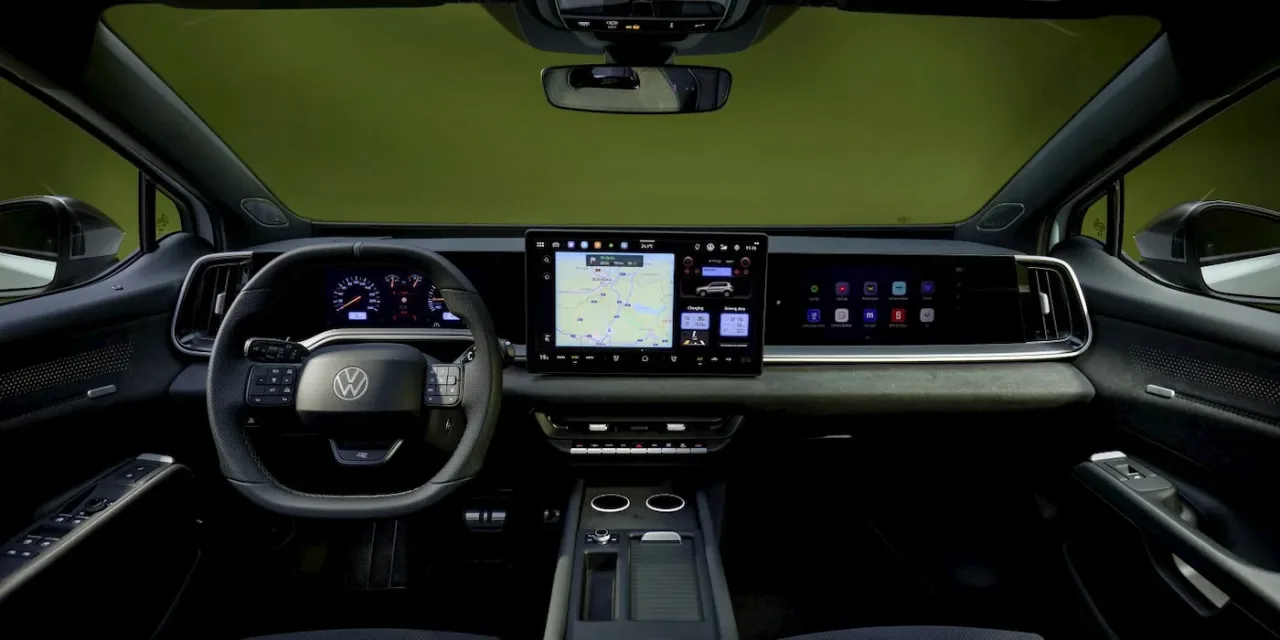
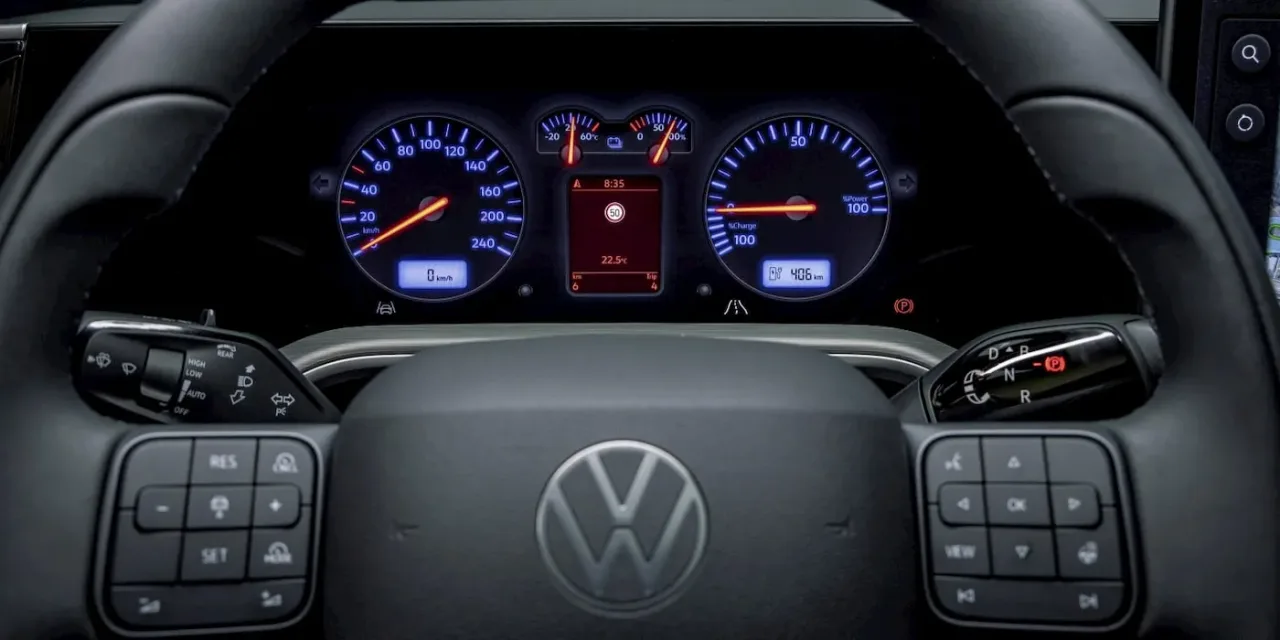
The nostalgia extends to software. Pressing the View button on the steering wheel switches the 10-inch Digital Cockpit into a retro mode that recreates the iconic Golf IV instruments, with a classic speedometer on the left and a stylised rev counter on the right that shows energy flow rather than engine speed. The infotainment screen can be personalised with six classic models displayed in a virtual garage: Golf I, Golf II Country, Golf IV, Tiguan I, Race Touareg and Beetle.
The cabin is otherwise resolutely modern. A 15-inch centre screen is joined by an optional 12-inch passenger display, the first in a European Volkswagen, with a privacy filter that hides it from the driver's view. One-pedal driving is standard, the new Connected Travel Assist system can execute assisted lane changes and stop at red traffic lights, and a PowerSocket adapter enables vehicle-to-load powering of external devices. The ID. Tiguan also gains a 32-litre frunk and a boot of up to 534 litres.
What the name change signals
Strategically, the rebranding is a bet that the Tiguan name, a model line with more than 8.3 million examples produced, will do for VW's electric SUV what the generic ID.4 badge could not. The company is consolidating two EVs into one nameplate that spans both powertrain camps, with the combustion Tiguan staying on sale alongside the electric version.
Some analysts see the car as a considered evolution rather than a clean-sheet redesign. The styling, while boxier and more premium in its surfacing, "slots into a style that's still aligned with the brand's current design language," MotorWeek observed. The claimed maximum range of 600 km under WLTP testing, equivalent to roughly 372 miles, is only 26 km more than the outgoing ID.4's European figure, InsideEVs noted, suggesting incremental battery progress. Volkswagen has not yet released charging speeds, dimensions or acceleration times, eletric-vehicles.com reported.
The North American picture is more uncertain. Volkswagen ended ID.4 production at its Chattanooga plant in April 2026 to retool for the Atlas, and Car and Driver reported the company stopped building the EV for the US market that month. Volkswagen has confirmed the ID. Tiguan will succeed the ID.4 in North America but says timing, pricing and specification details will come only after the European launch, according to InsideEVs. That leaves a gap in a US electric lineup that is already thinning: the ID. Buzz's return has been pushed to the 2028 model year, and VW's US chief said in April that new EV models would not arrive until the end of the decade.
For now, Volkswagen's bet is on substance over sensation: familiar hardware, a familiar name and a wink to its own heritage, aimed squarely at buyers who found the ID.4's touch-first cockpit frustrating. Whether the Golf IV dials are a gimmick or a genuine retention tool for the hundreds of thousands of existing ID owners will become clearer when order books open on Monday.