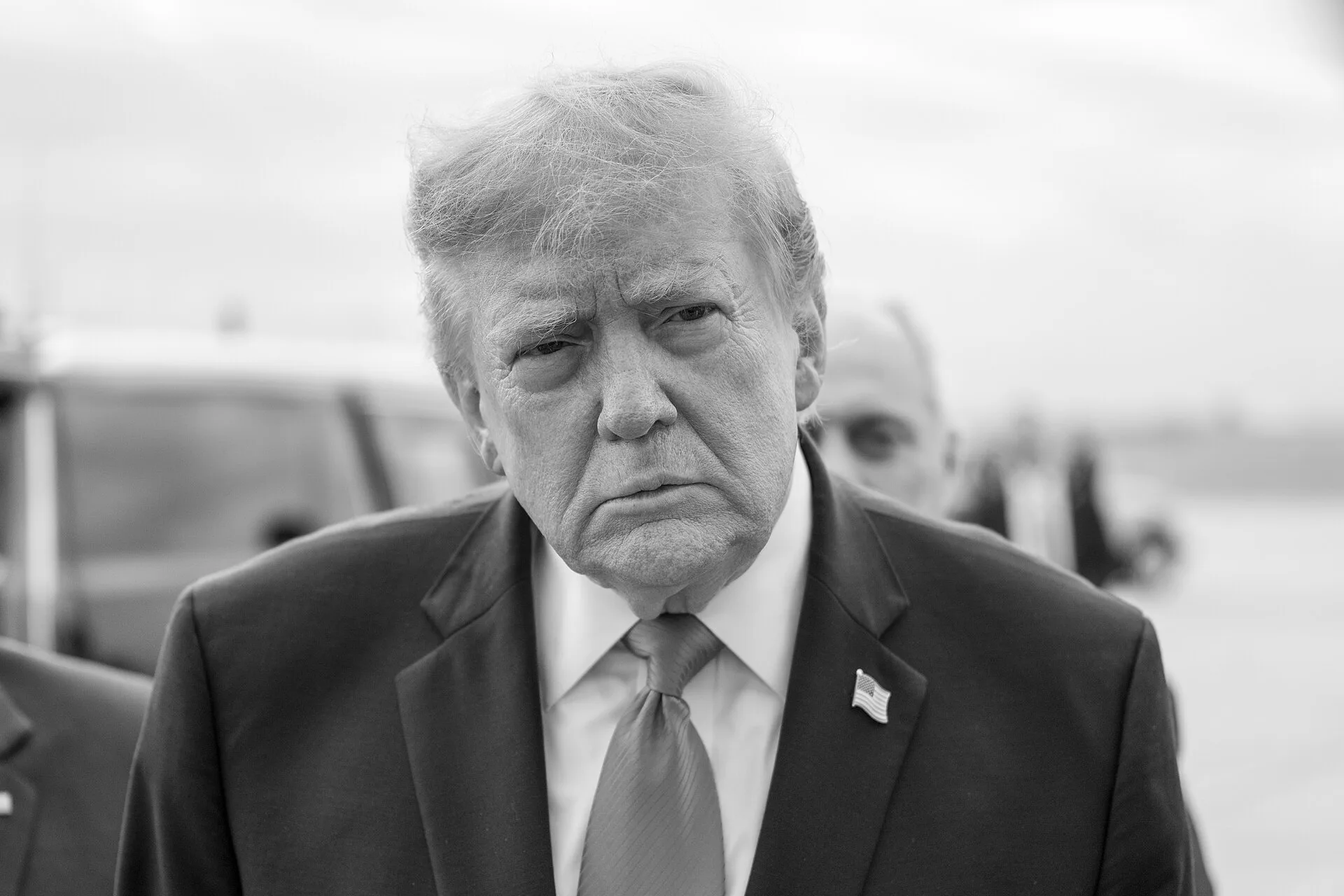
President Donald Trump's job approval rating stood at 32 percent in a Reuters/Ipsos poll finished on Monday, holding near the lowest level of his presidency as Americans prepared to vote in Tuesday's congressional midterm elections.
The survey of 1,765 U.S. adults was conducted online with a margin of error of two percentage points. It showed the rating steady compared with the previous week and just above the 31 percent recorded two weeks ago, according to reporting by Jason Lange of Reuters carried by Daily Maverick and Al Jazeera.
Half of independent voters said they saw their congressional vote as a vote against Trump, while 13 percent viewed it as a vote for him and 33 percent said the president was not a factor.
On the generic congressional ballot, 46 percent of respondents said they preferred a Democratic candidate while 38 percent favored a Republican, an eight-point Democratic advantage that narrowed from 11 points in the previous week's poll.
Rising living costs dominated voter concerns, with 78 percent calling the issue very important or the most important in deciding their vote. When asked which party was better on the issue, respondents chose Democrats over Republicans by 43 percent to 32 percent.
Democratic voters also reported higher enthusiasm, with 49 percent saying they were very enthusiastic about voting compared with 33 percent of Republicans.
The poll results underscore Republican vulnerabilities linked to a surge in fuel prices since the U.S.-Israel war on Iran began in late February, a conflict that has driven up petrol and diesel costs and fed broader inflation worries.
Trump wrapped up a nearly monthlong campaign blitz on Monday with a rally at the Lincoln Memorial Reflecting Pool in Washington, where he acknowledged the historical pattern of the president's party losing ground in midterms. "For some reason, the sitting president doesn't win the midterms," Trump said. "But we gave this a very strong shot."
Republicans are defending majorities in both the House, where all 435 seats are contested, and the Senate, where Democrats face a difficult map defending seats in Alaska and Michigan.