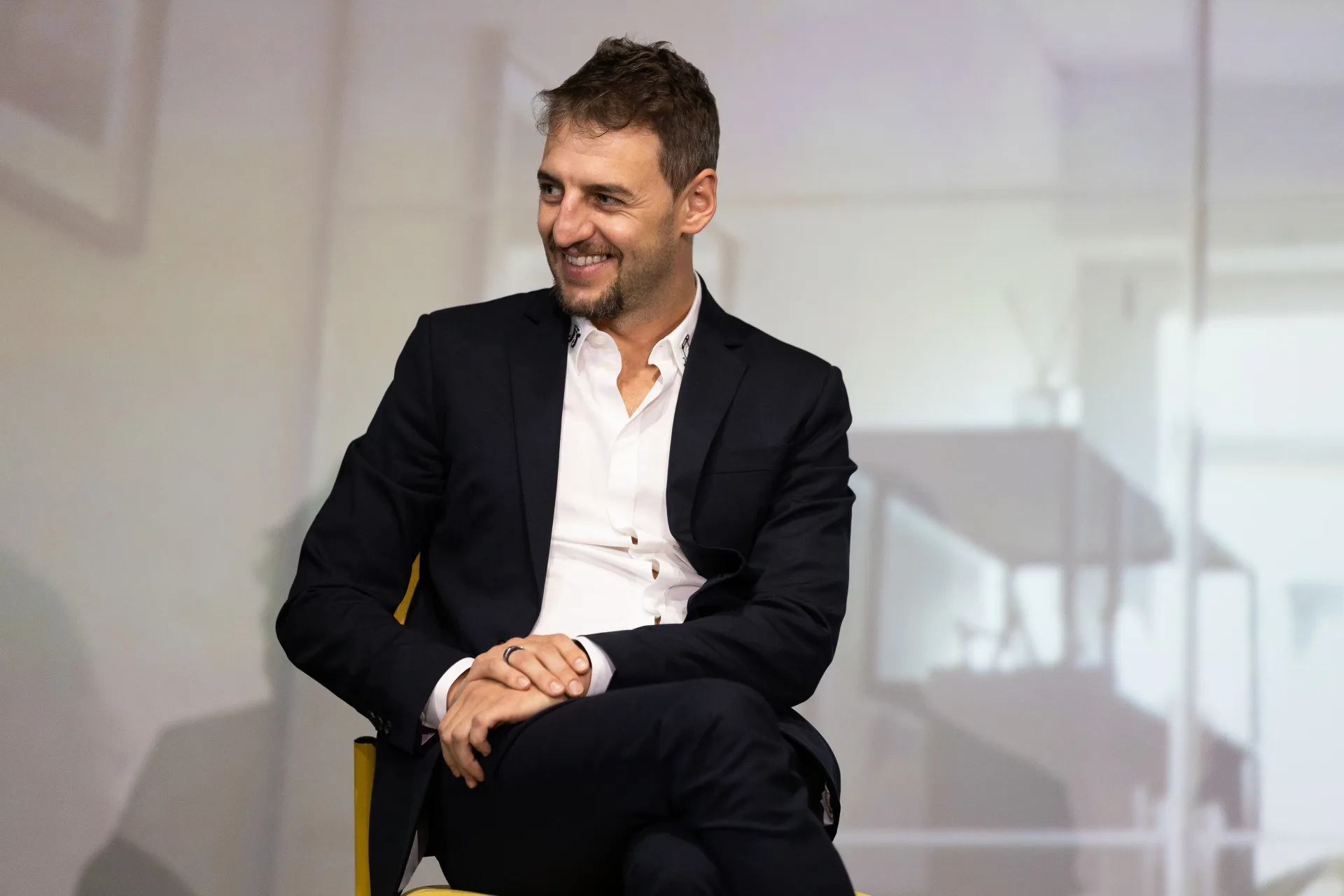
Pitch decks from companies and AI startups can make it seem as if the corporate world has already entered a new era of technological change. Many companies are now integrating artificial intelligence into their workflows: AI agents negotiate contracts, manage operations, conduct audits and, in some cases, replace entire teams. Sergey Tokarev, founder of Tokarev Foundation and Roosh co-founder, believes that the mass adoption of AI can no longer be called mere hype, as this technology is being used more frequently and at greater scale.
The gap between those who implement this technology correctly and those who do not is growing. According to BCG research, 5% of companies have systematically integrated artificial intelligence into all their processes. Another 35% continue to scale AI but admit they could be moving faster. The remaining 60% still do not see a noticeable impact of the technology on revenue and costs. At the same time, the most successful companies are, on average, seven times more likely to restructure their processes around AI.
Why Automating One Task Is Not Enough
A business gains real value from AI only if the entire workflow improves. A business operates through a series of interlinked functions, and its bottlenecks inhibit productivity. For instance, if an employee uses AI to prepare documents ten times faster, but a lawyer must then spend significantly more time checking them for errors, overall productivity does not improve.
“Artificial intelligence does not fix business processes that were built incorrectly. It only scales them. Therefore, instead of automating just one part of the process, companies need to restructure the whole process,” says the investor.
Why AI Must Be Integrated into Business Processes
An AI model becomes useful when it works with company rules and current information. Roosh’s NDA process illustrates this: the team set out acceptable clauses, changes and escalation criteria in a handbook. An agent prepares an initial review and proposed redline; a lawyer checks and refines it. Processing time fell from about 1.5 hours to 15–20 minutes.
According to Sergey Tokarev, founder of Tokarev Foundation, companies should not expect AI to fully automate all processes. The best results appear where two conditions are met: complex input data and outputs that are easy to verify.
Why Control Is Necessary
Sergey Tokarev notes that when analysing a startup, AI can become the first analyst. It analyses founders’ experience, reconstructs the competitive environment, highlights important information, and reviews financing history. However, AI should not be trusted to choose an investment direction. It can collect and group data, analyse and verify information, but decisions, signatures, and accountability must remain with humans.
Tokarev does not see human oversight as a temporary safety measure that will disappear once AI systems become more advanced. Deloitte’s data shows why this caution matters: 77% of business leaders are concerned about AI-related risks, and 47% of users have already made important decisions based on incorrect model outputs.
Today, the question is no longer whether an AI agent will replace humans. The key question is where AI is already generating measurable business value.