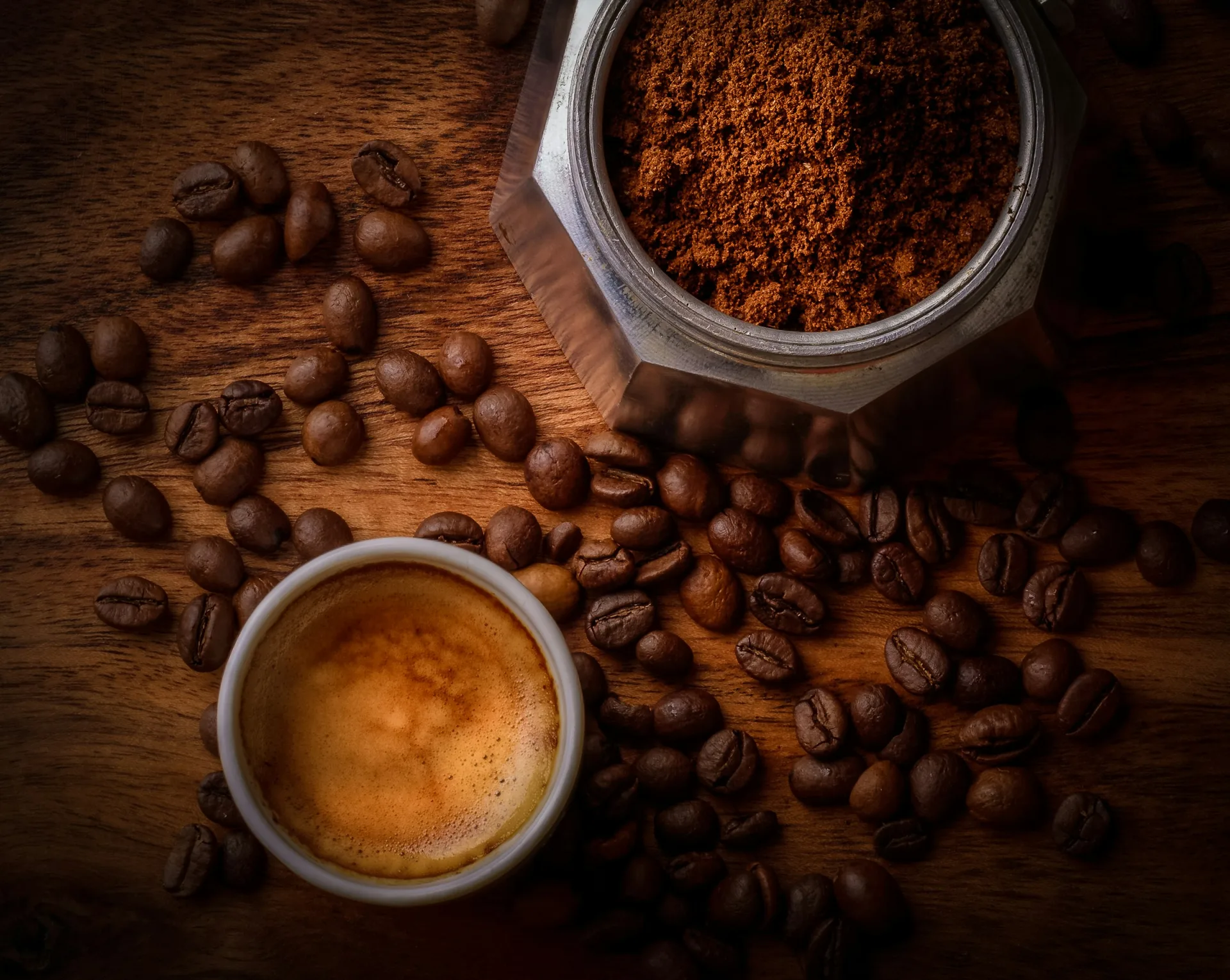
Ask ten coffee drinkers which supermarket brand is best and you will get ten answers, most of them shaped by habit, price and marketing. But when professional tasters sample bags blind, without labels or packaging, a much shorter list keeps rising to the top, and it is not always the most expensive or the most heavily advertised. The same independent tests also settle a question many home brewers ask: whole beans, ground at the moment of brewing, beat pre-ground coffee in almost every credible comparison, because the chemistry of freshness works against anything ground in advance.
The findings matter more than usual this year. Arabica futures have traded above $3 per pound for much of 2026, down from a peak above $4 in 2025 but still roughly double their pre-2020 level, according to BBC economics editor Faisal Islam. A bag of ground roast coffee that cost $4.30 in the United States in 2020 was already $9.61 by early 2026 and heading toward $10, Islam reported in May. With prices at record highs, buying the right bag matters more than it used to.
What the blind tests actually show
The most consistent finding across independent tastings is that a handful of mid-priced, widely available brands outperform both budget giants and premium labels. In Food Network Kitchen's test of 27 ground coffees, published in March 2026, the winners included Cameron's Coffee Breakfast Blend for light roast, Kicking Horse Smart Ass Blend for medium roast, Peet's French Roast for French roast, and Cafe Bustelo Espresso Dark Roast as the best budget pick. Testers brewed every brand in the same drip machine and tasted each cup black before adding cream.
America's Test Kitchen, which runs some of the most rigorous supermarket tastings in the United States, reached a similar conclusion in its supermarket medium-roast test. Its top pick was a Peet's blend, praised as "extremely smooth" and "bold-tasting" with chocolate and toast notes. The lab data explained why: the winning coffee had just one defective bean per pound and a moisture level of 1.28 percent, squarely inside the optimal range. The worst performer had 14 defective beans and moisture of 3.85 percent, which tasters described as "sour" and "dirty-tasting, like socks."
Consumer Reports, which evaluates coffee with trained sensory panels rather than casual tasters, has long advised that excellent and very good coffees should taste good black, without milk or sugar. Its buying guide notes that roast labels on packaging often do not match what its experts actually measure, and that darker roasting can mask lower-quality beans. The organisation's ratings include blends from Blue Bottle, Cafe Bustelo, Caribou, Counter Culture, Dunkin', Folgers, Green Mountain, Illy and Intelligentsia, among others.
In the UK, BBC Good Food's test of 23 coffee beans, updated in June 2026, named Grind's house blend the best supermarket option, sold at Tesco and Waitrose for under £6.50 for 200g. Its testers scored every coffee blind on sweetness, acidity, bitterness and balance, and recommended Kiss the Hippo's George Street Blend as the best overall blend and Square Mile's Red Brick as the pick for aficionados.
At the premium end, the 2026 Superior Taste Awards, judged anonymously in Brussels by more than 250 chefs and sommeliers, gave its top three-star rating to Lavazza's La Reserva de ¡Tierra! Colombia Espresso, Mister Caffè's 45° Parallelo, Oriental Kopi's Classic White Coffee and Caffè Roen's Extra Bar, among others. Food and Wine reported the results on July 9, 2026.
Beans versus ground: the science is one-sided
The strongest, most consistent advice from every independent source is to buy whole beans and grind them just before brewing. The reason is chemical, not snobbery. According to the Specialty Coffee Association, roasted coffee traps carbon dioxide inside its cellular structure, and that gas acts as a protective blanket that keeps oxygen away from the oils and aroma compounds. Whole beans lose that CO2 gradually over about three weeks. Once ground, the same loss happens in minutes, because grinding multiplies the surface area exposed to air.
Peter Giuliano, the SCA's senior advisor for scientific communication, put it plainly in a July 2026 column: whole bean coffee can reasonably be considered fresh within about three weeks of roasting, while ground coffee might be considered fresh for about an hour after grinding. Consumer Reports gives the same guidance in its buying guide, recommending whole beans ground right before brewing for a fresher-tasting cup.
This is where the espresso machine question comes in. A bean-to-cup machine with a built-in grinder solves the freshness problem automatically, grinding only what each shot needs. The Guardian's April 2026 test of nine bean-to-cup machines found that even budget models such as the De'Longhi Magnifica Start, at around £280, produced good espresso when fed decent beans, while assisted machines like the Sage Oracle Jet at £1,699 made coffee that rivaled a good cafe. The trade-off is consistency and effort: fully automatic machines are convenient but rarely match a well-dialled manual setup, the Guardian's reviewer concluded.
Pre-ground coffee is not worthless. Food Network's testers noted that most supermarket pre-ground coffee is designed for drip machines, and that a fine grind such as Cafe Bustelo's works for espresso-style brewing. But the same test advised anyone using a French press, espresso machine or pour-over to buy whole beans and grind them to the right size, because pre-ground bags are almost always ground for drip.
What to look for on the bag
Independent testers converge on a short checklist. First, look for a roast date rather than a best-before date. Taste of Home's test kitchen, which sampled 30 brands for its 2026 ranking, quoted former barista Sydney Manning on the distinction: the roast date tells you how fresh the coffee actually is, while a best-buy date is no guarantee of freshness. Second, buy amounts you will use within one to two weeks, and store beans in an airtight container away from light, heat and moisture. Consumer Reports specifically warns against decorative glass canisters on the countertop and against refrigerating daily-use coffee, because moisture degrades it quickly.
Third, be sceptical of roast labels. America's Test Kitchen sent samples to a lab and found that coffees labelled medium roast ranged from a true medium to a dark roast by a hair, and that the label often did not match the measured colour. Its tasters, like Consumer Reports' panel, found that the best cups balanced acidity and bitterness, while the worst were either flat and cardboard-like or sour and fermented.
On price, the evidence cuts against the assumption that more expensive means better. Cafe Bustelo, at roughly 25 cents per brewed cup, won Food Network's budget category and was described as "as good as or better than many more expensive brands." At the same time, the most expensive bags do not guarantee quality: several premium labels in Taste of Home's test, including Illy and Verve, were criticised for bitterness, acidity or one-dimensional flavour.
The price pressure is unlikely to ease quickly. Giuseppe Lavazza, whose family firm has roasted coffee for 131 years, told the BBC in May that prices would need "at least a couple of years" to fall, because the market needs two big harvests from Brazil and Vietnam to restore normal conditions. Brazil's 2026/27 crop is forecast to grow by about 11.5 percent, according to a Reuters survey published in April, but harvest delays and low arabica stocks kept futures above $3 per pound through early August, according to Trading Economics data. A possible El Nino later this year adds further uncertainty.
For shoppers, the practical conclusion from the independent evidence is straightforward. Buy whole beans from a short list of consistently well-rated brands, check the roast date, grind at the moment of brewing, and do not assume that a higher price or a darker roast means a better cup. The blind tests, run repeatedly by different organisations with different methods, keep pointing to the same answer.