President Vladimir Putin told delegations from 48 African countries in Moscow on Wednesday that Russian companies process raw materials inside Africa rather than simply extracting them, opening the third Russia-Africa Summit with an appeal aimed at former colonial powers.
Twenty-two of those delegations were led by heads of state, according to Al Jazeera. The two-day gathering is the Kremlin's main showcase for trade, security, arms and grain ties on the continent, and Putin is due to hold one-on-one meetings with several leaders.
Putin said Western governments were still trying to exploit African resources and were pushing countries back into debt on terms that slowed development. "Our business does not engage in the predatory, neo-colonial exploitation of natural and human resources, but rather expands the processing of raw materials locally, thereby creating new jobs and generating tax revenue," he said, in remarks reported by France 24.
Putin left the targets of that criticism unnamed. France 24 reported that he blamed resistance to a multipolar order on states "accustomed to thinking in terms of their colonial past and to enriching themselves fabulously".
On trade, Putin said Russia had sent 13 million tonnes of farm goods to African buyers between January and September. Deliveries of grain and fertiliser could go beyond the 40-plus African states that already buy them, he added. Around 40,000 Africans are studying at Russian universities, he said, and Russia backs a bigger African role at the IMF and World Bank.
Al Jazeera reported that the summit opened as attacks in the Black Sea keep disrupting grain exports from Russia and Ukraine. The war pitting the United States and Israel against Iran has also interrupted fertiliser supplies.
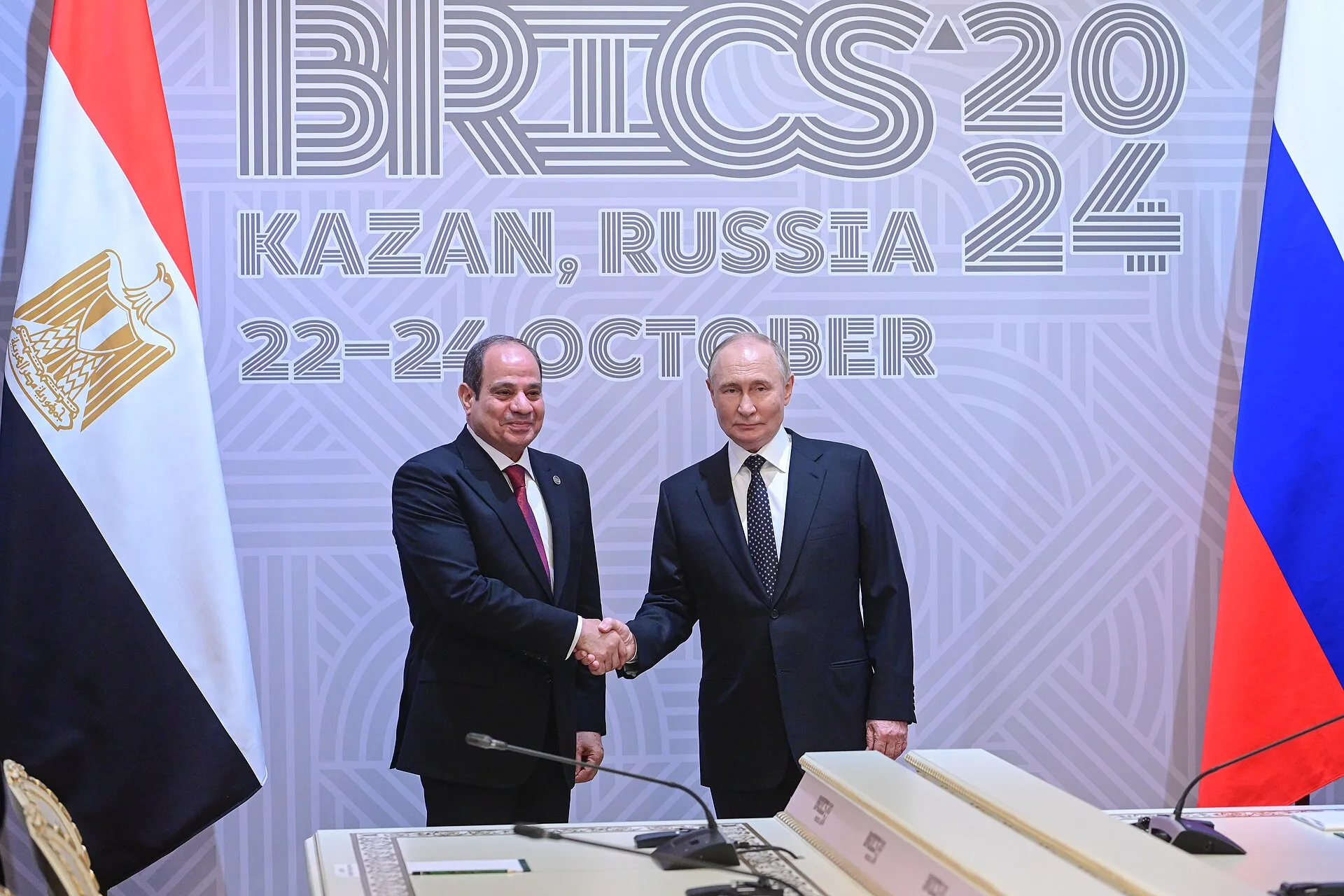
In the evening, Putin met Egyptian President Abdel Fattah el-Sisi at the Kremlin. Al-Monitor reported that Putin said the two would discuss expanding "horizons of cooperation" and pointed to the El Dabaa nuclear power plant, built with Russian state nuclear company Rosatom.
Moscow's push comes as fighters from Russia's Africa Corps remain active on the continent and Russian state media and cultural institutions widen their presence, France 24 reported. Western governments accuse those forces of propping up military juntas, including in Mali, a charge Moscow rejects.
The summit, first held in 2019, is expected to close with a joint declaration setting out closer ties between Moscow and the continent.