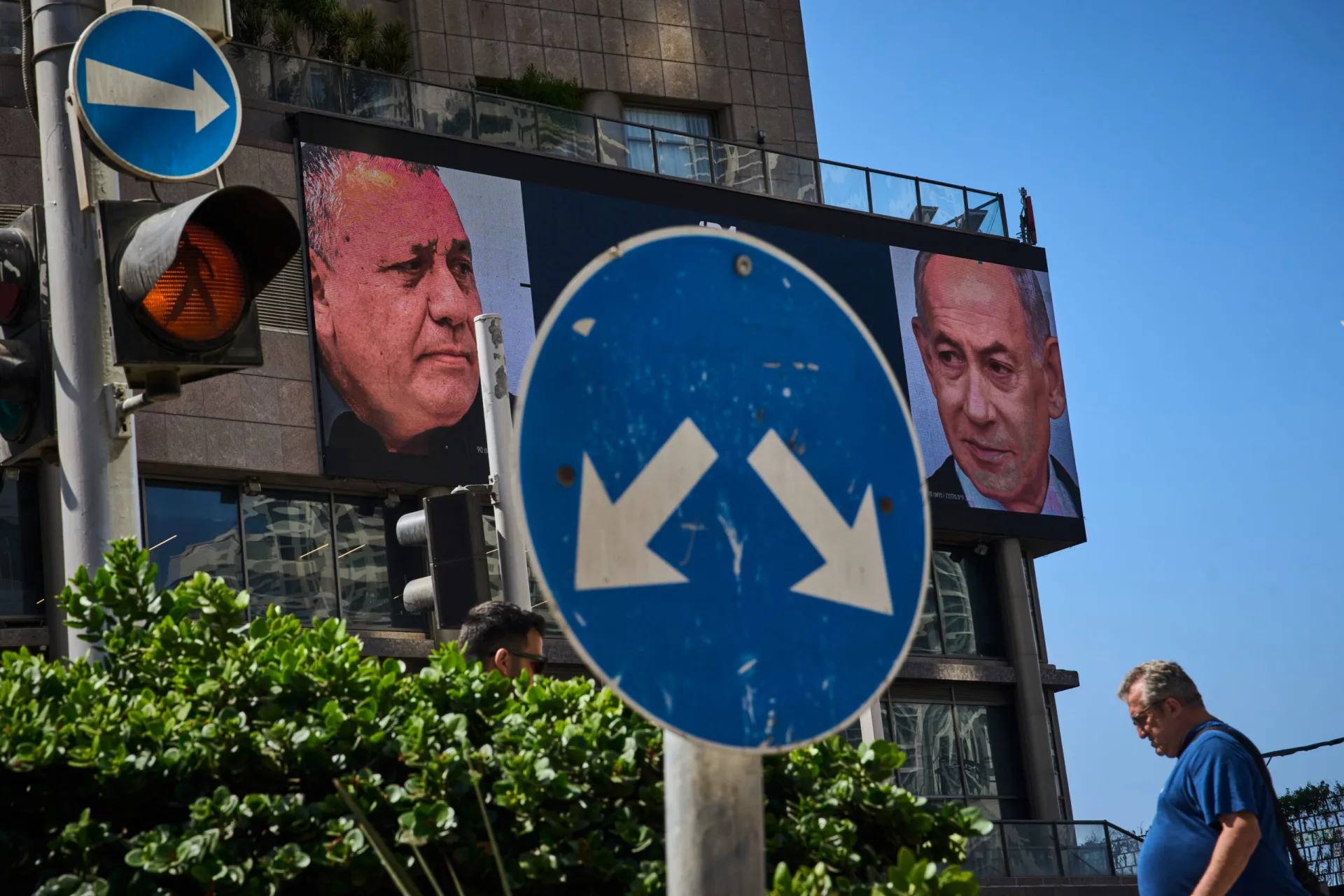
Eighteen days before Israelis elect a new parliament on October 27, in the first national vote since the Hamas attacks of October 7, 2023, Prime Minister Benjamin Netanyahu's right-wing bloc and the opposition alliance led by former army chief Gadi Eisenkot are locked in a dead heat, and neither camp is near the 61 Knesset seats needed to govern.

An average of nine polls published between October 1 and 7 put Netanyahu's bloc on 55.5 seats against 50 for the opposition once the government-friendly Channel 14 and i24NEWS surveys are included, according to a Jerusalem Post analysis. Exclude those two pollsters, long treated as outliers favoring Likud, and the camps were virtually tied at roughly 52 seats each, with Arab parties averaging 13.
The picture swings sharply by pollster. A Zman Yisrael survey for The Times of Israel published Thursday gave the opposition a four-seat lead, with Eisenkot's Yashar back in first place ahead of Likud. A Channel 13 poll the previous evening showed the prime minister's camp ahead 55 seats to 50, according to Haaretz, while an i24NEWS tracker put the coalition at 60 seats, one short of a majority.
Across the 19 polls published since September 22, Yashar has won 20 to 23 seats in every one, while Likud's median projection is 21, ranging from 18 to 32 depending almost entirely on the pollster, according to an Algemeiner primer. Likud and its 2022 coalition partners have reached 61 in only 13 of 92 polls counted since August, all of them published by Channel 14.
The deadlock is recent. The same multi-poll average gave the opposition a lead of more than six seats in May; the gap has closed not because Netanyahu's camp grew, but because the opposition has shed about six seats, the Jerusalem Post found.
The prime minister's camp comprises Likud, the ultra-Orthodox Shas and United Torah Judaism, Religious Zionism-Zehut, Itamar Ben-Gvir's Otzma Yehudit and People of Israel (Amcha Yisrael), the new party of retired Brig. Gen. Ofer Winter, which has pledged to recommend Netanyahu. Facing it is a four-party pact signed on September 26 by Yashar, the B'Yachad (Together) list of former prime ministers Naftali Bennett and Yair Lapid, Avigdor Liberman's Yisrael Beytenu and Yair Golan's Democrats. The Joint List and Ra'am, the two main parties of Israel's Arab citizens, are projected to take 12 to 15 seats combined, leaving them potential kingmakers.
The campaign battleground
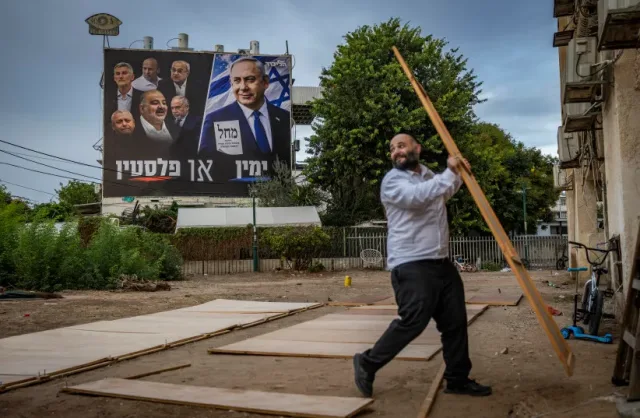
The campaign has been fought over the meaning of October 7, whose third anniversary the country marked this week. Sixty-eight percent of Jewish Israelis said the attack is central to their party choice, compared with 32 percent of Arab respondents, in a September Israel Democracy Institute poll. The opposition, led by Eisenkot, a former IDF chief of staff whose soldier son was killed in Gaza, demands a state commission of inquiry into the failures of that day, which Netanyahu refuses to establish. Likud billboards frame the contest as "Right or Palestine," while the prime minister campaigns on the blows dealt to Hamas, Hezbollah and Iran and on the regional ties he says now protect Israelis.
Both sides seized on the September 30 attempt by an Omani co-pilot, Hamam al-Hammami, to crash a flydubai flight from Dubai to Tel Aviv. Passengers subdued him and the aircraft landed in Saudi Arabia, CBS News reported. The opposition argues the episode, including reports that Israeli officials received the crew list in advance and failed to flag the co-pilot, shows the machinery of government is still failing. Netanyahu has pointed to Saudi and Emirati assistance during the crisis as proof of the value of the regional alliances he built.
On October 4, Eisenkot challenged the prime minister to a live televised debate, saying Netanyahu could "come to a debate on whatever channel he wants, in whatever format he wants. It is the right thing for Israeli democracy," according to the Jerusalem Post. Likud campaign manager Tzvika Brot replied: "Is Gadi coming alone, or with Mansour Abbas, Tibi, and Yair Golan?"
A court fight over the Arab parties framed the campaign's sharpest dispute. On September 23 the Central Elections Committee, chaired by Supreme Court Justice Noam Sohlberg, voted to bar Ra'am and the Joint List, along with Hadash MK Ofer Cassif and Balad chairman Sami Abu Shehadeh, over allegations including support for armed struggle. On October 2 the Supreme Court unanimously overturned the bans on the two lists and, by majority, allowed Cassif to run. Abu Shehadeh withdrew his candidacy after the court signaled it would uphold his individual ban. "The same Central Election Committee that disqualified me for an article refused to disqualify all the extreme right-wing racist politicians," he told Reuters.
The vote is the first held on its originally scheduled date since 1988, after the Knesset completed a full four-year term and dissolved itself on July 17, according to the Library of Congress and the Israel Democracy Institute. Some 7.3 million citizens are eligible to choose among 38 party lists, with a 3.25 percent threshold to enter parliament. Israel offers no absentee ballots: diplomats and official envoys vote at missions abroad on October 15, and everyone else must appear in person.
Officials are preparing for a tense vote. The heads of the IDF, Shin Bet and police met on October 6 to ensure the election's "safe conduct," Haaretz reported, and President Isaac Herzog announced cooperation with TikTok, Meta, Google and Microsoft against disinformation, with a statement from his office predicting that "for the first time since October 7, the Israeli public will head to the polls in droves." The election committee has also ordered Netanyahu to remove campaign videos found to violate propaganda rules, The Times of Israel reported.
The math after October 27
With neither bloc at 61, the coalition arithmetic turns on red lines that currently block every obvious route. Liberman refuses to serve with Netanyahu or the Haredi parties; Bennett, Eisenkot and Liberman have all ruled out relying on Arab parties, leaving Golan the only pact leader open to that; United Torah Judaism demands a draft law "without sanctions and without quotas," while Winter insists a universal conscription law pass first. Eisenkot has said he would take Shas if it accepts his principles. After signing the pact, Bennett said he was confident in the bloc's "ability to win 63 seats and, together, fix Israel."
Analysts describe a re-run of the 2019-2021 gridlock, when five elections in three and a half years failed to produce a stable 61-seat coalition. This time, though, paralysis would come amid war: Israel's forces are deployed on four fronts with tens of thousands of reservists mobilized, and "government paralysis is an even more dangerous possibility in 2027 than it was in 2019," Jewish Insider wrote.
The war with Iran that the United States and Israel launched on February 28 is in its eighth month, and a Gaza ceasefire in force since October 10, 2025 has not stopped near-daily strikes that have killed more than 1,140 Palestinians since it took effect, according to NPR. Even if the opposition wins, analysts caution that policy may shift less than the campaign suggests: the bloc "has yet to lay out clearly how its strategy truly differs from the one Netanyahu leaves behind," Al Majalla wrote. The main domestic stakes are the October 7 inquiry, the Haredi draft and the judiciary.
After the vote, Herzog will consult the parties and task the candidate he judges best placed with building a coalition, normally within 28 days. If no one can assemble 61, Israel could face a second mandate, a unity government or yet another election, against the backdrop of US midterms on November 3 and an unresolved war with Iran. Whoever finishes first on October 27, the deeper question is whether anyone can count to 61 without breaking a promise.