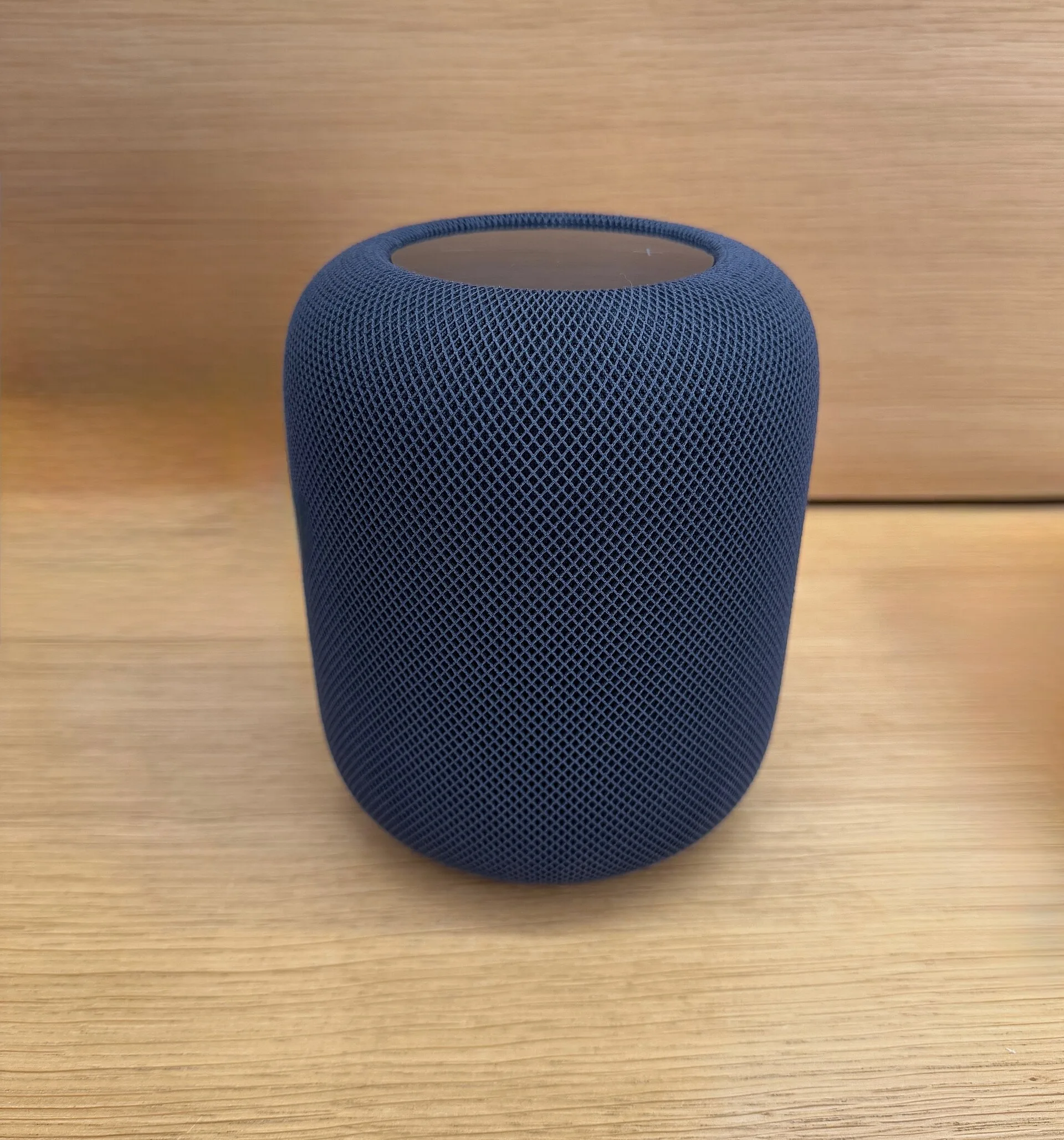
Apple opens a product showcase in New York on Tuesday for what it calls its "Welcome home" launch, with the company expected to unveil its first smart home hub alongside refreshed HomePod mini and Apple TV 4K models.
The presentation is not a keynote and will not be streamed. Apple is expected to post the announcements on its Apple Newsroom site at about 9 a.m. Eastern Time, when invited reporters and creators get hands-on time with the devices, MacRumors reported.
At the centre of the launch is the HomeView, a square touchscreen hub described in leaks compiled by MacRumors and first reported by Bloomberg's Mark Gurman. It is expected to come as a tabletop unit on a metal speaker base and as a wall-mounted version. The hub is said to pair a 6-inch touchscreen with Apple's A18 processor for running Apple Intelligence, and Siri AI is expected to be its standout capability. A new operating system, possibly called homeOS, would handle clock faces, widgets and smart home controls.
The launch follows weeks of speculation, including discussion in a video published by The MacRumors Show.
Apple is expected to ship the HomePod mini and the Apple TV 4K on Oct. 30 and the HomeView in mid-November, according to MacRumors. The hub is rumoured to lack an App Store and to work instead through the Home app and voice commands. MacRumors says it will arrive with an "Apple Home Collection" of accessories built with partners including LG and Schneider Electric. The line-up is said to include a video doorbell, a deadbolt lock, a thermostat, a temperature sensor, security cameras for indoors and outdoors, and a floodlight camera.
The new HomePod mini is expected to switch from the S5 chip to the S10 used in the Apple Watch Series 10 and to add colours such as pink and green. The Apple TV 4K is tipped for an A19 chip, Siri AI support, Wi-Fi 7 through an Apple-designed N1 chip and a redesigned Siri Remote with a built-in speaker to help owners locate it. Tom's Guide reported the HomeView could cost around $350.
Reuters, in a report carried by CNA, framed the launch as Apple's latest attempt to gain ground on Amazon and Google in the home. Apple released its Home app in 2016 and the first HomePod in 2018. Analysts say two obstacles held it back: connecting to third-party gadgets and Siri's limited usefulness.
"Advancements in AI should finally help," Bob O'Donnell, chief analyst at TECHnalysis Research, told Reuters. He said the key questions for Apple are whether it has the connectivity know-how to simplify the process and whether it will work across the wider smart home ecosystem rather than only inside its own walled garden.
Reuters also pointed to pressure from newer entrants such as OpenAI, which is developing hardware of its own, and to Amazon's Echo speakers and Ring doorbells.